Size & care
How to Clean and Store Juttis at Home (Leather and Embroidered)
A jutti is mostly leather and hand embroidery, so the usual shoe-cleaning tricks can ruin one. This is the care routine we print on our own product pages, gathered into one guide that covers leather pairs as well as embroidered and white ones.
In this guide
- Can you wash juttis?
- How to clean juttis at home, step by step
- How do you clean leather juttis at home?
- How do you clean embroidered or white juttis?
- How do you store juttis so they last?
- What should you never use on juttis?
- What if something comes loose?
- Where to buy juttis that are easy to look after
- Questions shoppers ask
Quick answer
Never wash or soak a jutti. Dust it with a soft dry brush and wipe the leather and any mirrors with a dry cotton cloth, then let it air out in the shade after each wear. Store it in a cotton dust bag away from sunlight with tissue paper in the toes.
Can you wash juttis?
No. Water is the one thing almost every jutti care card warns against: 180 of the 191 care notes on our own product pages say to keep the pair away from it (counted on 27 November 2026). Moisture loosens mirror settings, dulls mukaish dots, makes coloured thread bleed onto ivory fabric and leaves marks on leather.
Machine washing is worse. The drum bends the stiff back of the shoe, the detergent strips colour, and a soaked leather sole can take days to dry and may shrink or crack as it does. It also rules out a return, because our refund policy cannot accept pairs that show signs of washing.
How to clean juttis at home, step by step
This routine works for every pair we make. It takes about 15 minutes, plus drying time if the pair got damp.
How to clean juttis at home
- Soft dry brush (a clean makeup brush works)
- Two dry cotton cloths
- Tissue paper
- Cotton dust bag or pouch
- Leather-safe conditioner (leather pairs only)
-
Air it out
Leave the pair in the shade for a few hours after wearing it, so any sweat dries before you start.
-
Brush off the dust
Brush the embroidery lightly in one direction with a soft dry brush to lift dust out of the threads and from around beads.
-
Wipe leather and mirrors
Wipe the leather and any mirrors with a dry cotton cloth. Work around raised pearls and beads instead of over them.
-
Spot-clean plain leather
For a mark on plain leather only, dab it with a cloth that is barely damp and dry the spot at once. Keep water away from any embroidery or mukaish.
-
Condition dry leather
When a leather upper starts to look dry, rub in a little leather-safe conditioner. Test it on the inside of the back first.
-
Dry it naturally
If the pair got damp, stuff the toes with tissue paper and let it dry in the shade, away from direct sun or a heater.
-
Store it properly
Put tissue paper in the toes and keep each shoe in its own cotton pouch. Store the bag out of direct sunlight.
How do you clean leather juttis at home?
Leather juttis, including all our mukaish pairs, need the least fuss. Wipe the upper with a dry cotton cloth after each wear and let the pair air out overnight before it goes back in its bag.
Three leather problems come up again and again on our care cards:
- Colour transfer. Newly dyed leather can rub off onto light clothes, so wipe the upper with a dry cloth before the first wear.
- Lifted mukaish dots. If a metal dot lifts, press it back gently with a fingertip. Never pull it.
- Dryness. Now and then, rub in a little leather-safe conditioner with a soft cloth, testing it first on the inside of the back where it won't show.
Haldi stains are the classic wedding-season problem. Blot turmeric or oil straight away with a dry cloth, without rubbing it in, and take anything that stays to a cobbler or a leather cleaner rather than scrubbing at home. Soaps and household cleaners can strip the dye. That is why 26 of our care cards ask you to keep bleach and harsh cleaners well away.
How do you clean embroidered or white juttis?
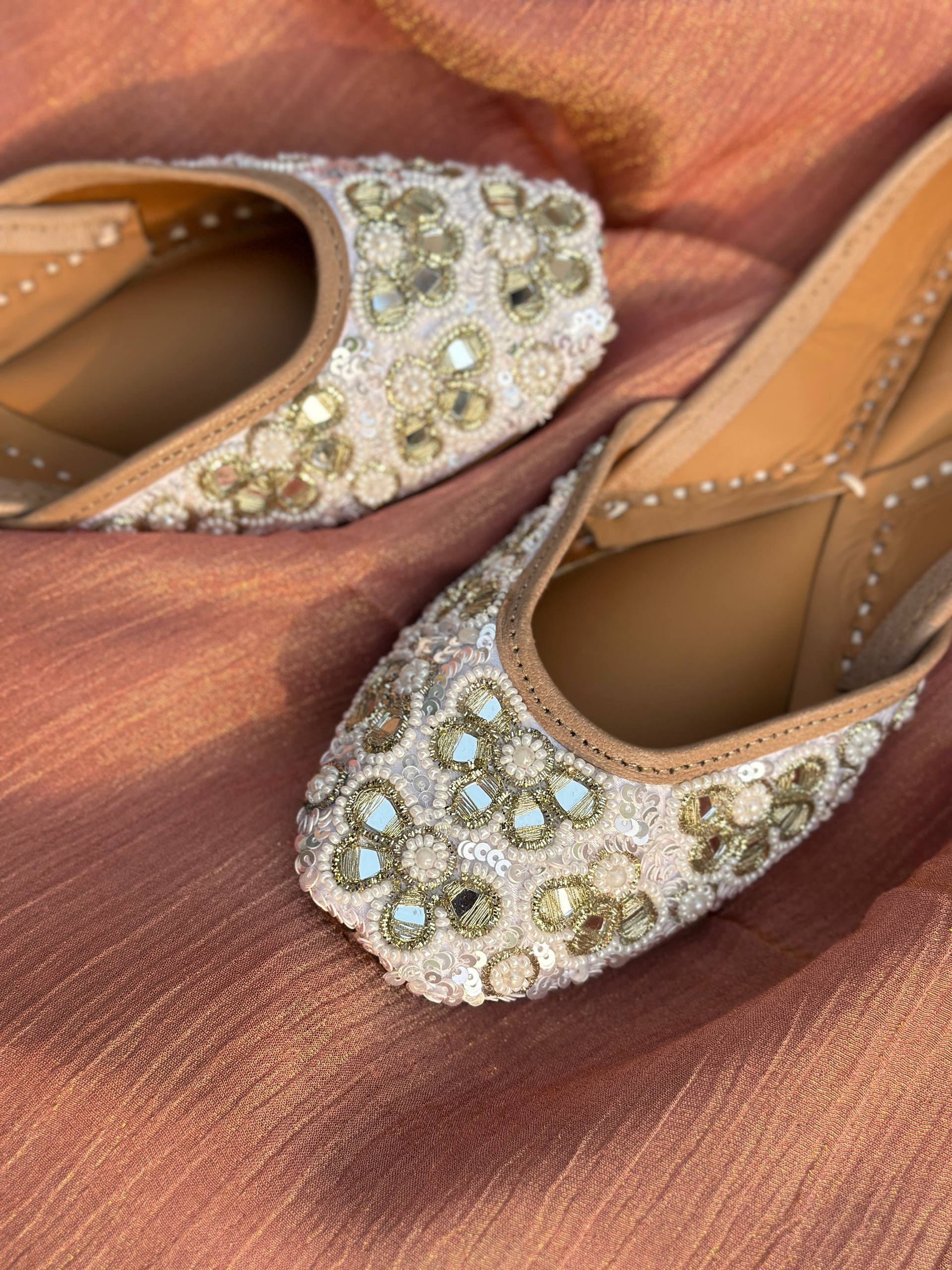
Embroidered pairs need a gentler hand. The work sits on fabric. Brush lightly in one direction with a soft dry brush to lift dust out of the threads, which is what 74 of our care cards recommend. Mirrors and pearls just need a dry cloth.
Loose threads are the next worry. If a sequin or bead thread comes loose, trim it neatly with small scissors rather than pulling it, which can open up a whole row of work.
White and ivory juttis
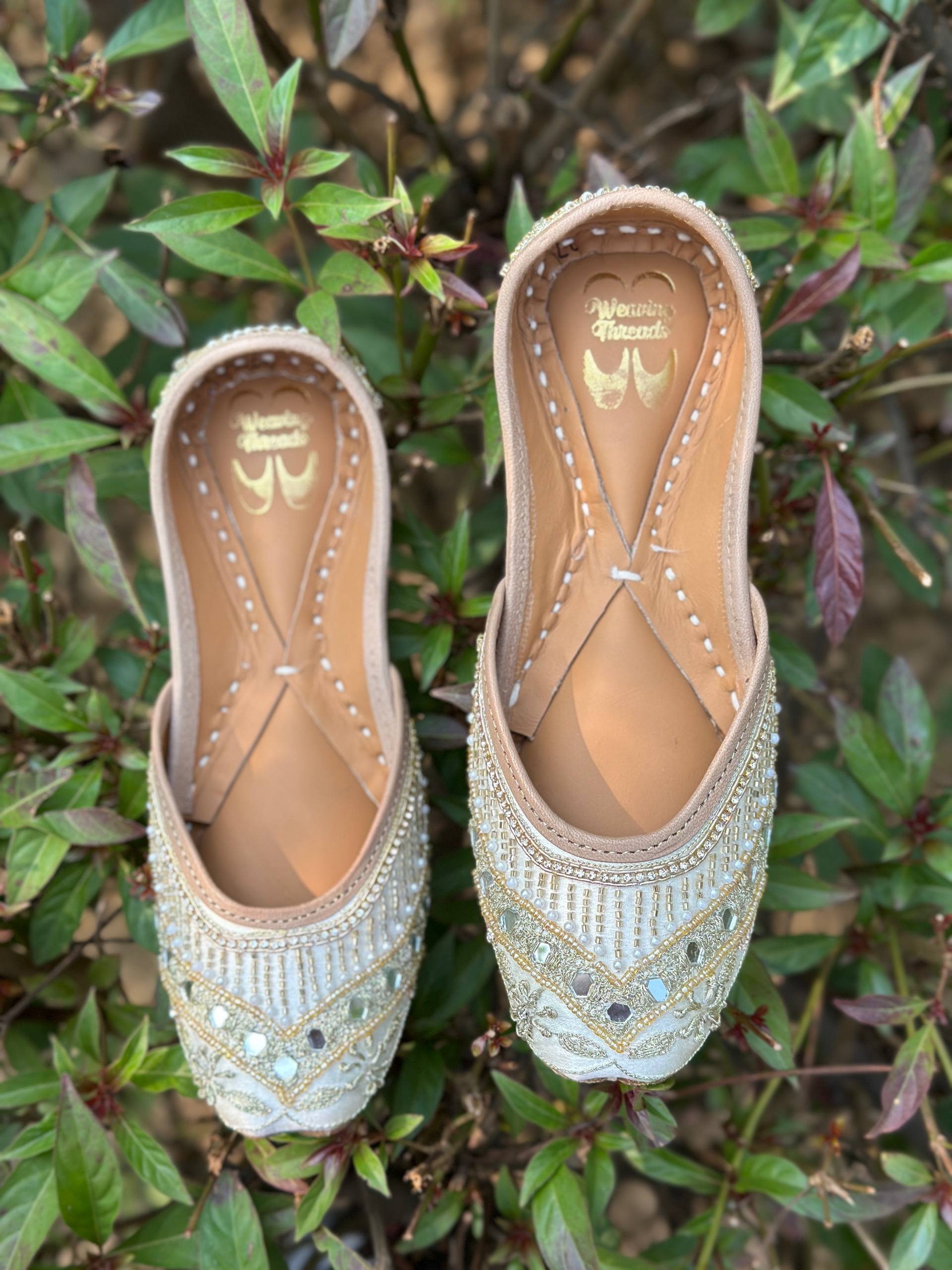
White and ivory pairs mark easily. Prevention matters more than cleaning here. Store them well away from dark fabrics, which can transfer colour onto the base, and keep every bottle of perfume or hairspray away from the pearls and sequins on the toe.
Brush a light grey mark on ivory fabric with a clean dry brush first. Often it is only dust. If a mark stays, don't scrub it or reach for a damp cloth, because water can leave its own stain on an ivory base that is harder to shift than the first one.
| Part | Safe | Keep away |
|---|---|---|
| Leather upper | Dry cotton cloth; leather-safe conditioner now and then | Soaking, soap, bleach, direct heat |
| Mukaish dots | Dry cloth; press a lifted dot back with a fingertip | Moisture, pulling at dots |
| Zari, tilla and thread | Soft dry brush, light strokes | Water, rough surfaces that catch thread, perfume |
| Pearls, beads and stones | Dry cloth, worked around them | Perfume, hairspray, lotion; knocks against steps |
| Mirrors (sheesha) | Dry soft cloth; store face-up in a pouch | Water, which loosens settings; abrasive surfaces |
| Ivory and white fabric | Soft dry brush; store apart from dark fabrics | Damp cloths, dark fabrics, perfume |
| Sole | Airing out after wear | Puddles, wet grass, soaking |
How do you store juttis so they last?
Storage does most of the work. Of our 191 care cards, 190 tell you to keep juttis in a dust bag or pouch and 98 add that it should stay out of direct sunlight. Sun fades colour and dries out leather.
- Tissue in the toes. Stuffing the toes with tissue paper holds their shape between wears; 56 of our cards say so.
- One pouch per shoe. Pairs with mirrors or stones will scratch each other if they share a bag, which is why 21 of our care cards ask for a separate pouch for each shoe. Store mirrored pairs face up.
- Silica in the monsoon. 18 of our cards suggest a silica sachet in the storage bag during the monsoon. In Delhi that means roughly July to September.
- Breathing room. Plastic boxes trap moisture. A cotton bag lets the leather breathe between wears.
What should you never use on juttis?
Most damage comes from treating a jutti like a sneaker. Skip all of these:
- Washing them in a machine or under a tap.
- Bleach and strong household cleaners, which strip dye.
- Heat of any kind to speed up drying, from a hair dryer to a sunny balcony.
- Shoe polish on embroidered or fabric uppers.
- Perfume or hairspray once the pair is on, which 122 of our care cards warn about.
- Pulling at a loose thread or a lifted mukaish dot.
What if something comes loose?
Small fixes are easy at home. Press a lifted mukaish dot back with a fingertip. Trim a loose sequin thread rather than pulling it. For anything bigger, like a sole coming away or a missing mirror, take the pair to a local mochi (cobbler), who can usually stitch or glue it properly. Skip instant glue on embroidery: it hardens and can stain the fabric.
If a new pair arrives with loose work, don't fix it yourself. Our refund policy covers damaged or defective products if you tell us within 3 days of delivery, with photos.
Where to buy juttis that are easy to look after
If low maintenance matters most, start with our leather mukaish juttis, which need little more than a dry cloth. For weddings and festivals, every pair in our Punjabi juttis for women collection lists its own care steps on its product page.
New to juttis? Read how a jutti differs from a mojari and a khussa before you choose.
Good to know
Questions shoppers ask
Can I wash juttis in a washing machine?
No. A machine soaks the leather, bends the back out of shape and can strip the colour from thread and dye. Our refund policy also cannot accept pairs that show signs of washing.
How do I clean white juttis at home?
Brush them with a clean dry brush and wipe any mirrors with a dry cloth. Water and perfume can both mark a white base, and so can dark fabrics rubbing against it in storage.
How do I get a stain off leather juttis?
Blot it straight away with a dry cloth. For a mark on plain leather, a barely damp cloth used in small dabs often lifts it, but dry the spot at once and keep water off any embroidery or mukaish. Take deep stains to a cobbler.
What should I do if my juttis get wet?
Pat them dry with a cotton cloth, stuff the toes with tissue paper and let them dry naturally in the shade. Don't use a hair dryer or put them in the sun, which can crack leather and fade colour.
How do I stop juttis from smelling?
Air them out in the shade after every wear before you put them away. A cotton dust bag lets the leather breathe, while a closed plastic box traps the moisture that causes the smell.
How often should I condition leather juttis?
Only when the leather starts to look dry or dull. Use a small amount of a leather-safe conditioner, test it inside the back first and keep it off any embroidery or mukaish.